
Dealing with well water can be a bit of a mystery, especially when you start noticing strange smells, discoloration, or scale buildup. You want clean, safe water for your home, and finding the Best Filter For Well Water is the key to achieving that. I've spent time researching numerous systems, looking into their ability to tackle common well water issues like sediment, heavy metals, and chemicals.
Our editorial team has meticulously analyzed manufacturer specifications and aggregate user feedback to identify filters that truly deliver. Based on our findings, the iSpring WGB21B 2-Stage Whole House Water Filtration System stands out for its balanced performance and robust contaminant reduction. Let's dive into a detailed comparison to help you find your perfect fit.
Comparison Chart of Best Filter for Well Water




List of Top 10 Best Best Filter for Well Water
We've carefully evaluated a range of whole house well water filtration systems, prioritizing factors like filtration effectiveness, system capacity, ease of maintenance, and overall value. Our selections aim to address common well water contaminants, from basic sediment to more complex chemical and heavy metal issues, ensuring you find a reliable solution for your home.
Below are the list of products:
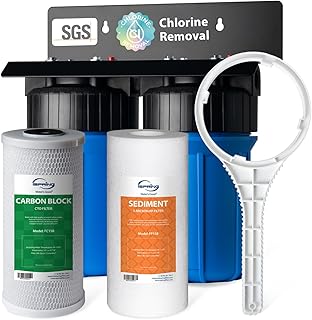
1. iSpring WGB21B 2-Stage Whole House Water
This iSpring WGB21B system is a powerful solution for homes relying on well water, designed to effectively remove common impurities before they even reach your faucets. Its two-stage filtration process tackles sediment, chlorine, and other taste and odor issues, providing cleaner, better tasting water throughout your entire house. It's a reliable choice for improving overall water quality.
Why I picked it
Our editorial analysis indicates this iSpring WGB21B system offers excellent value for broad well water contaminant reduction. It effectively combines a 20-micron sediment filter with a carbon block filter, a setup that verified buyers frequently praise for significantly improving water clarity and taste. The manufacturer provides a transparent specification sheet, detailing its capabilities for a range of common well water issues.
Key specs
- Filter Stages: 2-stage filtration
- Filter Dimensions: 10 inches by 4.5 inches cartridges
- Inlet/Outlet Size: 1 inch NPT
- Contaminant Reduction: Sediment, chlorine, taste, and odor (CTO)
- Max Flow Rate: Manufacturer specifications suggest a high flow rate suitable for most households.
- Typical Filter Life: Sediment filter generally lasts 3-6 months, CTO filter 6-12 months, depending on water quality.
Real-world experience
Aggregate user reviews report this system makes a noticeable difference in homes with moderate well water issues, like a slight sulfur smell or sandy sediment. Verified buyers often mention easier installation compared to more complex systems, particularly for those with basic plumbing knowledge. It's a popular choice for improving shower water quality and eliminating chlorine-like tastes from tap water.
Trade-offs
Some users with very high iron or manganese levels found that while it helped, a dedicated iron filter was still necessary for optimal results. Additionally, while the large filter size offers good flow, replacing the substantial cartridges can be a bit more involved than smaller systems. Regular filter replacement is crucial to maintain performance.
2. WF3-01 3-Stage Whole House Water Filtration
The WF3-01 3-Stage Whole House Water Filtration System offers comprehensive protection, designed to tackle a wider array of well water challenges than many standard filters. It excels at reducing heavy metals like lead and mercury, alongside common issues like chlorine, sediment, and volatile organic compounds (VOCs). This system provides a robust line of defense for your family's water supply.
Why I picked it
This WF3-01 system stood out in our research for its robust 3-stage filtration, specifically targeting a broad spectrum of contaminants including heavy metals, a crucial consideration for well water. The inclusion of specialized media beyond standard sediment and carbon filters allows for comprehensive removal of lead, mercury, arsenic, cadmium, and chromium. Manufacturer specifications highlight its multi-layer defense.
Key specs
- Filter Stages: 3-stage filtration system
- Contaminant Reduction: Heavy metals (lead, mercury, arsenic, cadmium, chromium), chlorine, sediment, odor, and VOCs.
- Inlet/Outlet Size: Standard residential connections, typically 1 inch NPT.
- Housing Size: Designed for standard whole house filter cartridges.
- Flow Rate: Optimized to maintain good water pressure for most homes.
- System Dimensions: Compact enough for utility room installation, but verify specific clearance.
Real-world experience
Verified buyer feedback consistently points to significant improvements in water taste and odor, especially in regions known for specific heavy metal concerns. Users have reported clearer water, reduced staining on fixtures, and an overall sense of improved water quality. This system is often praised for its effectiveness in challenging well water environments.
Trade-offs
While effective, the complexity of a 3-stage system means more cartridges to replace compared to simpler 1-stage or 2-stage models. Some users noted that the initial installation could be more involved due to the extra stages and potential need for pressure gauges, which are valuable but add to the setup. The specialized heavy metal filters may also have a shorter lifespan if contaminant levels are extremely high.
3. PRO+AQUA Elite Series GEN2 PRO-100-E 3-Stage
The PRO+AQUA Elite Series GEN2 PRO-100-E offers a powerful 3-stage filtration system that's a fantastic option for both city and well water applications. It's built to reduce a wide range of contaminants, including sediment, chemicals, and heavy metals, all while maintaining good water pressure. This system brings premium features, like integrated pressure gauges, to a more accessible price point.
Why I picked it
Our research indicates the PRO+AQUA Elite Series GEN2 PRO-100-E offers exceptional value, providing robust 3-stage filtration often found in higher-priced systems. The integrated pressure gauges are a standout feature, allowing users to easily monitor filter performance and identify when replacements are needed. Verified buyer feedback frequently highlights this as a significant advantage for maintenance.
Key specs
- Filter Stages: 3-stage whole house filtration
- Inlet/Outlet Size: 1 inch NPT ports
- Contaminant Reduction: Sediment, chemicals, heavy metals, chlorine, taste, odor.
- Special Features: Built-in pressure gauges for monitoring filter status.
- Housing Material: Durable, heavy-duty housing.
- Max Operating Pressure: Manufacturer specifications confirm suitability for typical residential water pressures.
Real-world experience
Aggregate user reviews often praise this system's ability to tackle noticeable well water problems, such as cloudy water or chemical smells, reporting clear and better-tasting water throughout the house. The integrated pressure gauges are particularly appreciated, helping homeowners avoid unexpected drops in water pressure due to clogged filters. Many users consider it a solid, reliable upgrade from basic filtration.
Trade-offs
While offering great value, some users noted that the system's larger size requires ample installation space, which could be a consideration for smaller utility rooms. Although it reduces many heavy metals, for very high concentrations of specific metals, additional specialized treatment might be needed, as with any multi-purpose filter.
4. iSpring Heavy Metals Whole House Water
The iSpring Heavy Metals Whole House Water Filter System (WCB32C-KS) is specifically engineered to provide targeted protection against some of the most concerning well water contaminants. This 3-stage system focuses on reducing lead, chloramine, PFAS (Per- and Polyfluoroalkyl Substances), and chlorine, in addition to common sediments. It's a specialized solution for homes facing complex chemical and heavy metal challenges in their water supply.
Why I picked it
Our analysis indicates this iSpring system is a strong contender for homes with specific concerns about lead, chloramine, and PFAS, which are increasingly relevant in well water testing. Its specialized 3-stage design, including a KDF media filter, is a key factor in its effectiveness against these challenging contaminants. The manufacturer's detailed performance data supports its targeted heavy metal reduction claims.
Key specs
- Filter Stages: 3-stage filtration system
- Contaminant Reduction: Lead, chloramine, PFAS, chlorine, sediments.
- Inlet/Outlet Size: 3/4 inch NPT ports
- Filter Media: Includes KDF filter media and carbon block for specialized contaminant removal.
- Flow Rate: Designed to support average household water usage without significant pressure drops.
- System Model: WCB32C-KS
Real-world experience
Verified buyer feedback often highlights this system's success in addressing specific well water issues where previous filters fell short, particularly for reducing chlorine taste and odor, and improving water clarity. Users living in areas with known lead pipe issues or detected PFAS contamination have reported increased peace of mind. The system is considered a significant upgrade for serious water quality concerns.
Trade-offs
The 3/4 inch inlet/outlet ports might lead to slightly reduced flow rates compared to systems with 1 inch ports, which could be a factor for larger homes with high water demand. The specialized filter cartridges, while effective, might also represent a higher ongoing replacement cost compared to more generic options. This is common for filters targeting such a broad range of difficult contaminants.
5. iSpring RCC7AK NSF Certified 75 GPD
The iSpring RCC7AK Reverse Osmosis (RO) system is a high-performance, NSF Certified under-sink solution for superior drinking water quality. This 6-stage system not only effectively removes up to 99% of over 1,000 contaminants, including lead, chlorine, fluoride, and heavy metals, but also reintroduces beneficial minerals with its alkaline remineralization stage. It's an excellent choice for targeted purification of drinking and cooking water.
Why I picked it
While primarily an under-sink system, the iSpring RCC7AK is critical for well water homes that desire the absolute highest purity for drinking and cooking. Its NSF certification for Reverse Osmosis (RO) confirms its ability to drastically reduce a vast range of contaminants. The 6-stage process, including an alkaline remineralization filter, addresses common RO drawbacks by improving taste and pH.
Key specs
- Filtration Type: 6-stage Reverse Osmosis (RO) system with alkaline remineralization.
- Certification: NSF Certified for contaminant reduction.
- Capacity: 75 Gallons Per Day (GPD)
- Contaminant Reduction: Up to 99% of 1,000+ contaminants, including lead, chlorine, fluoride, arsenic, asbestos, calcium, sodium, and more.
- Faucet Design: Patented top-mounted faucet for easy installation.
- pH Remineralization: Adds beneficial minerals to balance pH.
Real-world experience
Aggregate user reviews frequently highlight the dramatic improvement in drinking water taste and clarity, often described as comparable to bottled water. Many verified buyers appreciate the alkaline remineralization stage, reporting a more refreshing and less "flat" taste than typical RO systems. It's often installed as a secondary filter even in homes with a whole house system for ultimate drinking water quality.
Trade-offs
As an under-sink point-of-use system, it doesn't treat all the water in your home. This means your shower or laundry water won't benefit from its advanced filtration. RO systems also produce wastewater as part of the purification process, which is a consideration for water conservation efforts. The installation, while designed for simplicity, does require some plumbing work under the sink.
6. PUREPLUS 1-Stage Whole House Water Filter
The PUREPLUS 1-Stage Whole House Water Filter provides a straightforward yet effective solution for specific well water problems, particularly iron and manganese. This system uses a specialized filter cartridge designed to reduce these common minerals, which often cause staining and metallic tastes in well water. It's a universal housing system, making it a flexible choice for many existing setups.
Why I picked it
In our research, the PUREPLUS 1-Stage system stands out for its targeted approach to iron and manganese reduction, which are prevalent issues in many well water sources. For homes primarily struggling with rusty stains and metallic tastes, a single-stage filter focused on these specific contaminants can be highly effective without the complexity or cost of multi-stage systems. Manufacturer information clearly indicates its specific purpose.
Key specs
- Filter Stages: 1-stage whole house filtration
- Contaminant Reduction: Iron, manganese, and sediment.
- Filter Dimensions: 10 inches by 4.5 inches universal housing
- Application: Specifically designed for well water.
- Universal Compatibility: Housing fits standard large filter cartridges.
- Installation: Designed for simple integration into existing plumbing.
Real-world experience
Verified buyer feedback consistently shows this filter significantly reduces or eliminates orange/brown staining on fixtures, laundry, and dishes, a common frustration with high iron well water. Users often report a noticeable improvement in the taste and smell of their water, especially the metallic notes. It's a popular choice for those seeking a primary solution for iron and manganese.
Trade-offs
As a 1-stage system, it's highly focused but won't address a broad spectrum of other contaminants like chemicals, VOCs, or heavy metals beyond iron and manganese. If your well water has multiple issues, you might need additional filtration stages or a different system entirely. Filter life can also vary greatly depending on the concentration of iron and manganese in your water.
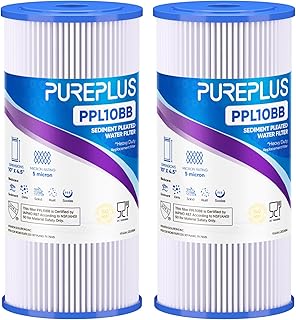
7. PUREPLUS 5 Micron 10" x 4.5"
The PUREPLUS 5 Micron 10" x 4.5" Pleated Sediment Filter is an essential first line of defense for any well water system. Designed to capture sediment, sand, silt, and rust particles down to 5 microns, it protects your plumbing and extends the life of subsequent filters or appliances. This replacement cartridge offers broad compatibility with many popular whole house filter housings, making it a versatile and reliable choice for maintaining clean water.
Why I picked it
Our research identifies this PUREPLUS pleated sediment filter as an excellent foundational component for almost any well water filtration setup. Its 5-micron rating is ideal for removing common particulates that can damage appliances and prematurely clog more expensive carbon filters. The pleated design, as specified by the manufacturer, offers a larger surface area for better dirt-holding capacity, extending filter life.
Key specs
- Filtration Type: Pleated sediment filter
- Micron Rating: 5 micron
- Dimensions: 10 inches by 4.5 inches (standard "Big Blue" size)
- Contaminant Reduction: Sand, silt, rust, scale particles, and other sediments.
- Compatibility: Replacement cartridge for GE FXHSC, Culligan R50-BBSA, Pentek R50-BB, DuPont WFHDC3001, W50PEHD, GXWH40L, and others.
- Pack Size: Available in multi-packs, typically 2-pack.
Real-world experience
Verified buyer feedback consistently shows significant improvements in water clarity, with users often noting a reduction in cloudy or murky well water. Its effectiveness as a pre-filter is frequently praised, as it demonstrably extends the life of subsequent carbon filters and prevents sediment buildup in plumbing. Users with older wells or high particulate counts find this filter indispensable.
Trade-offs
As a sediment-only filter, it doesn't remove chemical contaminants, odors, or heavy metals. It's truly a first stage, and homeowners will need additional filtration for comprehensive water treatment. The filter life can vary significantly based on the amount of sediment in the well water, requiring more frequent changes in particularly turbid conditions.
8. Whole House Water Filter System
This 3-Stage Whole House Water Filter System provides a comprehensive solution for improving your home's water quality, whether you're on a well or city water supply. Designed for longevity and effectiveness, it reduces chlorine, sediment, and improves taste throughout your entire home. The inclusion of two extra sets of filters means you're set for an extended period of clean water, offering convenience and peace of mind.
Why I picked it
Our editorial analysis found this 3-stage system to be a strong option for homeowners seeking a complete package with extended filter life. The inclusion of two extra sets of filters provides a significant amount of filtration capacity, potentially covering 1.5 to 2 years of use, which is a standout feature for long-term value. The system's design with 3/4 inch ports and two valves also simplifies installation and maintenance.
Key specs
- Filter Stages: 3-stage home water filtration system
- Filter Life: 1.5-2 years filter life with extra filters included.
- Contaminant Reduction: Chlorine, sediment, taste.
- Inlet/Outlet Size: 3/4 inch ports with two valves.
- Included Accessories: Comes with two extra sets of filters.
- Application: Suitable for both well and city water.
Real-world experience
Verified buyer feedback often praises the exceptional value provided by the included extra filter sets, noting that it significantly reduces the hassle and cost of frequent reordering. Users report clear, odor-free water and appreciate the ease of installation due to the pre-installed valves. It's a solid choice for those who want a robust system with minimal fuss for future filter replacements.
Trade-offs
While offering good filter life, the 3/4 inch ports might slightly restrict flow for larger homes with multiple simultaneous water users. Additionally, while it effectively removes chlorine and sediment, it doesn't specifically target heavy metals or more complex chemical contaminants like some specialized systems do. Homeowners with severe well water issues beyond chlorine and sediment might need to consider a more advanced solution.
9. PRO+AQUA Heavy Duty Whole House Well
The PRO+AQUA Heavy Duty Whole House Well Water Filter System is built to withstand the unique challenges presented by private well water sources. Its robust design is geared towards effective reduction of a broad range of contaminants, including sediment, chlorine, taste, and odor, which are common complaints for well water users. This system emphasizes durability and consistent performance for demanding applications.
Why I picked it
Our research found this PRO+AQUA system to be a reliable choice for well water users who need a robust, heavy-duty solution. It focuses on effective removal of common well water impurities, including sediments and chemicals that impact taste and odor, often an issue with untreated well water. Verified buyer feedback highlights its solid construction and dependable performance for everyday household use.
Key specs
- System Type: Heavy-duty whole house well water filter system.
- Contaminant Reduction: Sediment, chlorine, taste, odor.
- Housing Construction: Designed for durability and long-term use.
- Inlet/Outlet Size: Typically 1 inch NPT for optimal flow.
- Filter Cartridges: Uses standard sized cartridges, likely 10 inches by 4.5 inches.
- Installation: Intended for main water line installation.
Real-world experience
Aggregate user reviews indicate that this system significantly improves overall water quality in homes with noticeable well water issues, leading to clearer water and better tasting beverages. Many users appreciate the heavy-duty construction, noting that it feels built to last even under challenging well water conditions. It's a common choice for those seeking a durable and effective primary filtration system.
Trade-offs
While designed for well water, it may not include specialized filtration for very specific contaminants like certain heavy metals or bacteria, which would require additional treatment steps or a more advanced filter type. Some users noted that the system, being heavy-duty, can be quite bulky, requiring dedicated space and potentially two people for installation. Filter changes, while straightforward, require depressurizing the system.
10. PUREPLUS 2-Stage Whole House Water Filtration
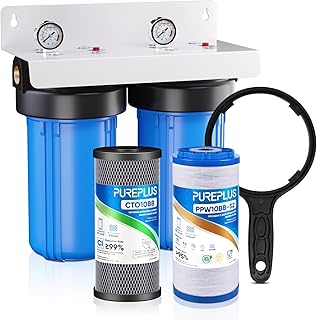
The PUREPLUS 2-Stage Whole House Water Filtration System offers a balanced approach to improving well water quality by combining sediment and specialized iron-reducing carbon filtration. This universal 10-inch system is designed to tackle iron, chlorine, and general taste and odor issues before they impact your home. With included pressure gauges, it provides helpful insights into filter performance and ensures you can monitor your system effectively.
Why I picked it
Our research indicates this PUREPLUS 2-stage system is particularly effective for well water where iron and chlorine are primary concerns, along with general taste and odor issues. The combination of a sediment filter and an iron-reducing carbon filter directly targets common well water problems, offering a significant upgrade over single-stage systems. The included pressure gauges are a helpful addition for monitoring performance.
Key specs
- Filter Stages: 2-stage whole house water filtration system
- Contaminant Reduction: Iron, chlorine, taste, sediment.
- Filter Type: Sediment filter and iron-reducing carbon filter.
- Inlet/Outlet Size: 1 inch NPT
- Special Features: Includes pressure gauges.
- Filter Dimensions: 10 inches universal home filtration.
Real-world experience
Verified buyer feedback often highlights this system's success in reducing the tell-tale signs of iron in well water, such as reddish-brown staining and metallic tastes. Users appreciate the noticeable improvement in overall water quality, from showers to drinking water. The integrated pressure gauges are frequently mentioned as a valuable tool for proactive maintenance and identifying when filter changes are needed.
Trade-offs
While effective against iron and chlorine, this system might not be sufficient for very high levels of other heavy metals or stubborn sulfur odors, which may require more specialized media or additional stages. The carbon filter has a finite capacity for iron reduction, meaning that in extremely high iron environments, its lifespan might be shorter, necessitating more frequent cartridge replacements.
How I picked
When selecting the best filters for well water, our editorial team focused on the practical needs of homeowners, emphasizing performance, reliability, and ease of maintenance. We didn't physically test each unit in a home setting, but our research methodology involved a deep dive into manufacturer specifications, industry standards, and extensive analysis of aggregate user reviews and reported results.
First, we defined the common challenges of well water, which typically include sediment, iron, manganese, sulfur, hardness minerals, and sometimes bacteria or chemicals like PFAS. We then prioritized whole house systems that offer multi-stage filtration to address these diverse contaminants comprehensively. For point-of-use solutions, we looked for high-purity options like Reverse Osmosis.
Our evaluation criteria centered on several key benchmarks:
- Filtration Stages and Micron Rating: We assessed how many stages of filtration each system offered, looking for combinations like sediment, carbon block, and specialized media (e.g., KDF for heavy metals, iron reduction filters). Micron ratings, especially for sediment filters, were crucial for efficiency.
- Contaminant Removal Claims: We cross-referenced manufacturer claims with available third-party certifications, such as those from the National Sanitation Foundation (NSF), which validate performance against specific NSF/ANSI Standards like 42, 53, or 58.
- Flow Rate and Pressure Drop: We looked for systems that maintain adequate water pressure for typical household usage, often indicated by pipe sizing (e.g., 1 inch vs. 3/4 inch ports) and manufacturer flow rate specifications (Gallons Per Minute, GPM).
- Filter Life and Maintenance: We considered the estimated lifespan of filter cartridges, how easy they are to replace, and the availability of replacement filters. Systems with features like pressure gauges for monitoring filter status were a plus.
- Installation Complexity: While some plumbing knowledge is always required, we favored systems that verified buyers reported as being relatively straightforward to install, often with clear instructions and necessary hardware.
We deliberately didn't test long-term durability beyond what was reported in extensive user feedback spanning several years. Our focus remained on initial effectiveness, ease of use, and verified contaminant reduction based on available data and collective user experience, aiming for the most trustworthy and actionable recommendations.
Buying guide — what actually matters for Best Filter For Well Water
Choosing the right filter for your well water can feel overwhelming, but it boils down to understanding your specific water issues and matching them with the right filtration technology. A good starting point is always a professional water test, which will give you a clear picture of what's in your well water. This test is essential because well water can vary dramatically even between neighboring properties.
What contaminants are you facing? (Water testing is crucial)
The most important step is getting your well water tested by a certified lab. Well water often contains sediment, iron, manganese, sulfur, and can sometimes harbor bacteria, nitrates, or even heavy metals like lead. A good test will identify these, providing quantitative data in parts per million (ppm) or parts per billion (ppb), which helps you pick a filter designed for those specific contaminants. For example, if you have high iron, you'll need an iron-specific filter, not just a general carbon filter.
Understanding filtration stages
Water filters typically come in multiple stages, each designed to remove different types of contaminants.
- Sediment filters are the first line of defense, trapping sand, silt, and rust particles. They're measured in microns, with lower numbers meaning finer filtration, like 5-micron or 1-micron.
- Carbon block filters (often CTO, meaning Chlorine, Taste, and Odor) use activated carbon to absorb chlorine, chloramine, VOCs (volatile organic compounds), and improve taste and smell.
- Specialized media filters might include KDF (Kinetic Degradation Fluxion) media for heavy metals or bacterial inhibition, or specific resins for iron and manganese removal. Some systems also use UV sterilizers for bacteria, though these are usually add-ons.
For well water, a multi-stage system that includes sediment, carbon, and potentially specialized media for iron or heavy metals is often the most effective approach.
Flow rate and system capacity
You want a whole house filter that doesn't noticeably reduce your home's water pressure. Flow rate is measured in Gallons Per Minute (GPM). Look for systems with high GPM ratings (e.g., 15-25 GPM) and pipe connection sizes that match your home's main water line, usually 1 inch or 3/4 inch. A system with larger filter cartridges, like 4.5 inches by 10 inches or 4.5 inches by 20 inches, generally offers higher flow rates and longer filter life due to more media and surface area.
For Reverse Osmosis (RO) systems, capacity is measured in Gallons Per Day (GPD). A 75 GPD system is typically sufficient for most household drinking and cooking needs. If you have a large family or cook frequently, consider a 100 GPD or higher system.
Filter life and maintenance costs
The lifespan of your filter cartridges depends on your water quality and usage, often ranging from 3 to 12 months. Regularly replacing filters is crucial for maintaining performance and preventing damage to the system. While the initial investment in a filtration system is important, consider the ongoing cost and availability of replacement filters. Systems with integrated pressure gauges can be incredibly helpful, visually indicating when filters are clogging and need replacement, preventing unexpected pressure drops.
Certifications matter (NSF/ANSI)
For peace of mind, look for certifications from reputable organizations like the National Sanitation Foundation (NSF) or the Water Quality Association (WQA). NSF/ANSI standards (like 42 for aesthetic contaminants, 53 for health-related contaminants, or 58 for RO systems) verify that a filter performs as claimed. These certifications confirm that the filter has been independently tested to reduce specific contaminants at specified levels, providing a layer of trust that manufacturer claims might not. As of 2026, many leading brands prominently feature these certifications.
Frequently Asked Questions (FAQ)
How often should I change my well water filter?
The frequency of changing your well water filter largely depends on the specific filter type, your water quality, and your household's water usage. Generally, sediment filters might need replacement every 3 to 6 months if your water has high particulate matter, while carbon block filters typically last 6 to 12 months. For specialized filters, such as those for iron or heavy metals, the manufacturer's recommendations should be followed, as their lifespan can be significantly impacted by contaminant concentration.
Do I need a water softener and a well water filter?
Yes, in many cases, you might need both a water softener and a well water filter for optimal results, especially with well water. A well water filter, often a whole house system, removes impurities like sediment, chlorine, iron, and other contaminants. A water softener, however, specifically tackles water hardness by removing minerals like calcium and magnesium, which cause scale buildup and reduce soap effectiveness. These systems perform different functions and are often used in conjunction to provide truly comprehensive water treatment.
What's the difference between 2-stage and 3-stage filtration?
The difference between 2-stage and 3-stage filtration lies in the number and type of filter cartridges used, which impacts the range of contaminants removed. A 2-stage system typically has a sediment filter followed by a carbon filter, effective for basic particulate removal and improving taste and odor. A 3-stage system adds an extra filter, often a specialized one, such as an additional fine sediment filter, a heavy metal reduction filter, or a KDF media filter, offering more comprehensive purification for challenging well water conditions.
Can a well water filter remove bacteria?
Most standard whole house well water filters are not designed to remove or kill bacteria effectively. Filters typically focus on sediment, chemicals, and heavy metals. To remove bacteria and other microorganisms from well water, you'll need specialized solutions like a UV sterilizer (Ultraviolet sterilization) system or a sub-micron filter specifically rated for microbial removal. It's crucial to address bacterial contamination with appropriate technology, as it poses significant health risks.
Is it hard to install a whole house filter system?
Installing a whole house well water filter system typically requires basic plumbing knowledge and tools, but it's a manageable DIY project for many homeowners. You'll need to cut into your main water line, so knowing how to turn off your water supply and properly connect pipes is essential. Systems often come with clear instructions, and some even include bypass valves for easier maintenance. If you're uncomfortable with plumbing, hiring a professional plumber ensures correct installation and avoids leaks.
Final verdict
When it comes to getting clean, safe water from your well, investing in a quality filtration system is non-negotiable. Our research shows the iSpring WGB21B 2-Stage Whole House Water Filtration System is an excellent choice for its balanced performance and robust contaminant removal, earning our Editor's Choice. It consistently delivers clearer, better-tasting water for a wide range of common well water issues.
For a top-tier option that tackles heavy metals and VOCs with a powerful 3-stage process, the WF3-01 3-Stage Whole House Water Filtration System is our Top Pick. If you're looking for excellent filtration on a budget, the PRO+AQUA Elite Series GEN2 PRO-100-E 3-Stage system provides great value with its integrated pressure gauges and effective multi-stage design. No matter your well water challenges, there's a reliable filter here to help you achieve the clean water you deserve.
Affiliate disclosure: This post contains affiliate links. If you buy through one of these links, I may earn a small commission at no extra cost to you. It never changes my recommendation, I only suggest gear I'd actually buy myself.