
Have you ever opened up a head of lettuce, ready to slice it for a salad, only to find hints of pink or reddish discoloration peeking through? That blush can be a bit alarming, making you wonder if your greens have gone bad. Thankfully, what causes lettuce to turn pink is usually a natural plant process, not spoilage.
This phenomenon is closely tied to specific compounds within the plant and how it reacts to its environment. For many lettuce varieties, pinking occurs when temperatures deviate by more than 10°F (5.6°C) from their ideal growing range, which is typically between 60-75°F (15-24°C). Understanding these triggers can help both home gardeners and commercial growers maintain healthier, more vibrant lettuce.
Why Is My Lettuce Turning Pink?
Seeing pink or red hues on your lettuce can be a little unsettling, but it's a common occurrence for many lettuce enthusiasts. It's not typically a sign that the lettuce has spoiled or is unsafe to eat, but rather an indicator that the plant is responding to certain environmental or physiological conditions. Think of it as the plant's way of signaling it's experiencing a bit of stress.
Quick Answer: Pink Lettuce is Usually a Stress Response
The simplest way to put it is that pink or reddish coloration in lettuce is almost always a sign of plant stress. This stress can arise from various factors, and the plant's response is to produce natural pigments called anthocyanins. These are the same compounds responsible for the colors in berries, red cabbage, and autumn leaves.
What's Really Happening: Understanding Anthocyanins in Lettuce
At its core, the pinking of lettuce boils down to the production of anthocyanins. These are antioxidant pigments that plants produce. While they give us beautiful colors in fruits and flowers, in lettuce, they're often a byproduct of the plant trying to cope with less-than-ideal conditions. Scientists have observed that increased anthocyanin synthesis in leafy greens is a direct response to environmental cues designed to protect the plant cells.
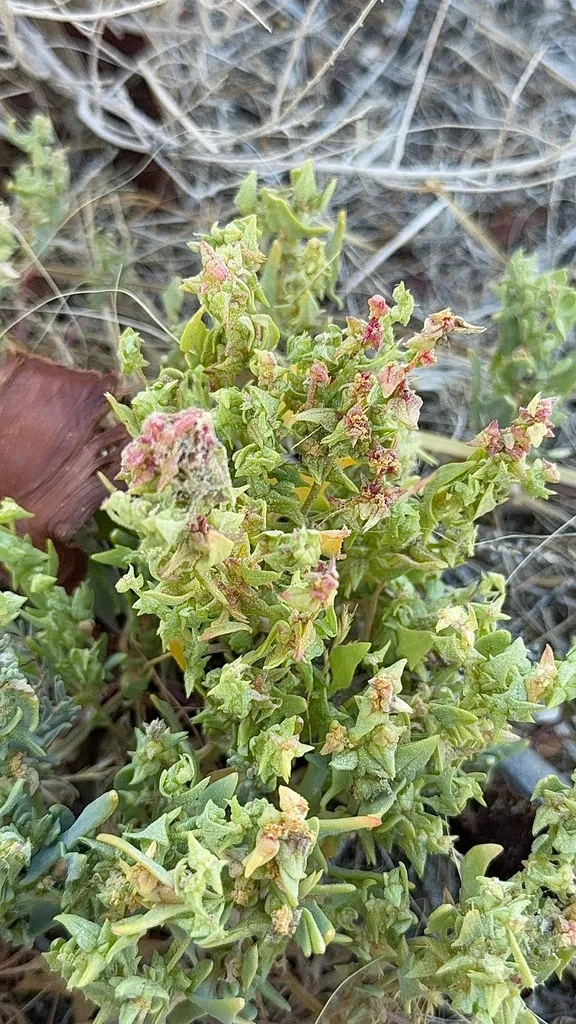
Image source: iNaturalist / Irene
Research indicates that these pigments can act as a sort of natural sunscreen, helping to protect the plant's tissues from damage caused by fluctuating light or temperature. So, while it might look odd, it’s a natural defense mechanism.
Triggering the Pink: The Role of Plant Stress
Multiple studies have linked the onset of pink pigmentation in lettuce to various forms of stress. These aren't necessarily signs of imminent doom for the plant, but they are clear signals that something in its environment isn't quite to its liking. Identifying the specific stressor is key to managing the issue and preventing it in the future.
Here’s a breakdown of the primary stress factors we've seen:
- Temperature Extremes: Both heat and cold snaps can trigger the response.
- Light Intensity: Sudden changes or excessive light can cause damage.
- Nutrient Imbalances: Issues with soil pH can prevent nutrient uptake.
- Watering Irregularities: Too much or too little water stresses the roots.
How Temperature Swings Affect Lettuce Color
Lettuce thrives in consistent, cool temperatures. When the mercury starts to yo-yo, that's when you often see pink edges develop. Extreme heat can cause cellular damage, prompting the plant to produce more protective pigments. Conversely, a sudden cold snap after a period of warmth can also shock the plant.
This stress response means higher concentrations of anthocyanins are synthesized in the leaves, manifesting as that reddish or pink tinged appearance.
Light: Too Much or Too Little Can Cause Pinking
Just like temperature, light plays a crucial role in lettuce health. Too much direct sunlight, especially during the hottest parts of the day, can be just as stressful as high temperatures. The plant might start producing anthocyanins as a form of natural sunblock. On the flip side, while less common, very low light conditions over extended periods can also stress the plant, as it struggles to photosynthesize effectively.
Any sudden shift in light exposure, be it to much less or much more, can be a trigger.
Soil pH and Nutrient Uptake Mysteries
The soil's pH level is a critical factor in how well lettuce can access the nutrients it needs to grow. Lettuce generally prefers a slightly acidic to neutral pH, typically between 6.0 and 6.8. If the soil becomes too alkaline or too acidic, certain essential nutrients become locked up. This nutrient deficiency, even if the nutrients are present in the soil, can stress the plant and lead to the production of anthocyanins.
It’s a chain reaction: bad pH leads to poor nutrient uptake, which leads to plant stress, which leads to pinking.
Watering Worries: Over and Under Affecting Color
How you water your lettuce has a direct impact on its root system and overall health. Both overwatering and underwatering can cause significant stress. Overwatering can lead to root rot because the roots are deprived of oxygen, essentially suffocating them. Underwatering, on the other hand, causes the plant to wilt and struggle to maintain its cellular structure.
In either scenario, the plant experiences distress, and this can trigger the production of those tell-tale anthocyanin pigments, leading to pinkish discoloration.
Image source: iNaturalist / Irene
Troubleshooting Your Pink Lettuce: A Step-by-Step Approach
So, you've got pink lettuce. Now what? The key is to play detective and see which of those stress factors we talked about might be at play. It's not about a single magic bullet, but rather about observing your specific growing situation.
Think of this as a mini diagnostic. By systematically checking a few common culprits, you can usually zero in on what's causing your lettuce to blush.
Step 1: Assess Your Recent Weather Patterns
First, let's look outside. Have there been any drastic temperature shifts in the past few days? When temperatures swing wildly, say, a heatwave followed by a cold snap, or overnight lows that plummet significantly, lettuce gets stressed. A difference of more than 10°F (5.6°C) in a short period is a common trigger.
If your outdoor temperatures have been erratic, especially if you’ve had a few days over 80°F (27°C) followed by nights dipping below 50°F (10°C), that's a strong indicator. For container-grown lettuce, has it been moved from a cool spot to a hot, sunny windowsill suddenly?
Step 2: Evaluate Your Lettuce's Light Exposure
Next, consider how much light your lettuce is getting. While most varieties need good light to thrive, too much direct, intense sun can be overwhelming, particularly in the afternoon. This is especially true if your plants are in containers, which can heat up quickly.
Check if your lettuce is planted in a spot that receives scorching midday sun for many hours. If you recently moved a plant from a shadier area to a much sunnier one, that sudden change in light intensity can also cause stress and that pinkish reaction.
Step 3: Check Your Watering Consistency
Now, let's talk water. Both extremes, too much and too little, can lead to pinking. Is the soil constantly waterlogged, feeling squishy and heavy? Or does it dry out completely between waterings, leaving the plant looking a bit droopy?
The ideal for most lettuce is consistently moist, but not soggy, soil. If you're watering sporadically, or if your soil drains poorly, your lettuce's roots are likely struggling, and that stress can manifest as pink leaves. Aim for soil that feels like a wrung-out sponge.
Step 4: Examine Your Soil Conditions
The foundation of healthy growth is good soil. What's the texture like? Is it compacted and hard to dig into, or loose and crumbly? Soil compaction can prevent roots from getting the air they need.
More importantly, think about the soil's pH. Lettuce prefers a slightly acidic to neutral pH, generally ranging from 6.0 to 6.8. If your soil is too far outside this range, the plant can't efficiently absorb crucial nutrients, even if they're present. This nutrient deficiency is a significant stressor.
If you’re growing in containers, consider using a fresh potting mix formulated for vegetables.
Step 5: Inspect the Plant for Other Signs
Beyond the pinking, are there any other visual cues from your lettuce plant? Sometimes, the pinkness is just one symptom of a larger issue.
Look for signs like wilting, yellowing leaves (chlorosis), stunted growth, or dry, crispy edges that aren't pink but might be brown. These additional symptoms, combined with the pinking, can give you a clearer picture of the overall health of your plant and the specific problem it's facing. For instance, yellowing patterned with pink might point more strongly to a nutrient issue, while wilting and pinking could suggest watering problems.
