
Figuring out if your chicken is cooked through without turning it into a dry, tough disaster can feel like a culinary tightrope walk. If you've ever sliced into a bird and seen a hint of pink, you know that sinking feeling, making you wonder, "What internal temperature is chicken done?" Getting this right is key to both deliciousness and, more importantly, safety.
This isn't just about guesswork; it's backed by science and official guidelines. For instance, the United States Department of Agriculture (USDA) clearly defines the safe minimum internal temperature for all poultry, and hitting that specific mark is non-negotiable for preventing foodborne illnesses. Let's dive into how to nail it every time.
The Golden Temperature: What You Need to Aim For
For chicken, the safe internal temperature you’re aiming for is a solid 165°F (74°C). This isn't just an arbitrary number; it’s the temperature that effectively destroys the most common and concerning bacteria found in poultry, such as Salmonella and Campylobacter. Manufacturing specifications for food safety thermometers often calibrate to ensure accuracy around this range. Reaching this benchmark ensures your chicken is safe to eat, minimizing the risk of food poisoning.
How to Be Sure You've Hit the Mark
Just guessing or going by time alone can be risky, especially since chicken pieces can vary in thickness and oven temperatures can fluctuate. The most reliable method to confirm your chicken is cooked to the right internal temperature involves using a food thermometer. This simple tool takes the guesswork out of cooking and is your best friend for safe, juicy poultry.
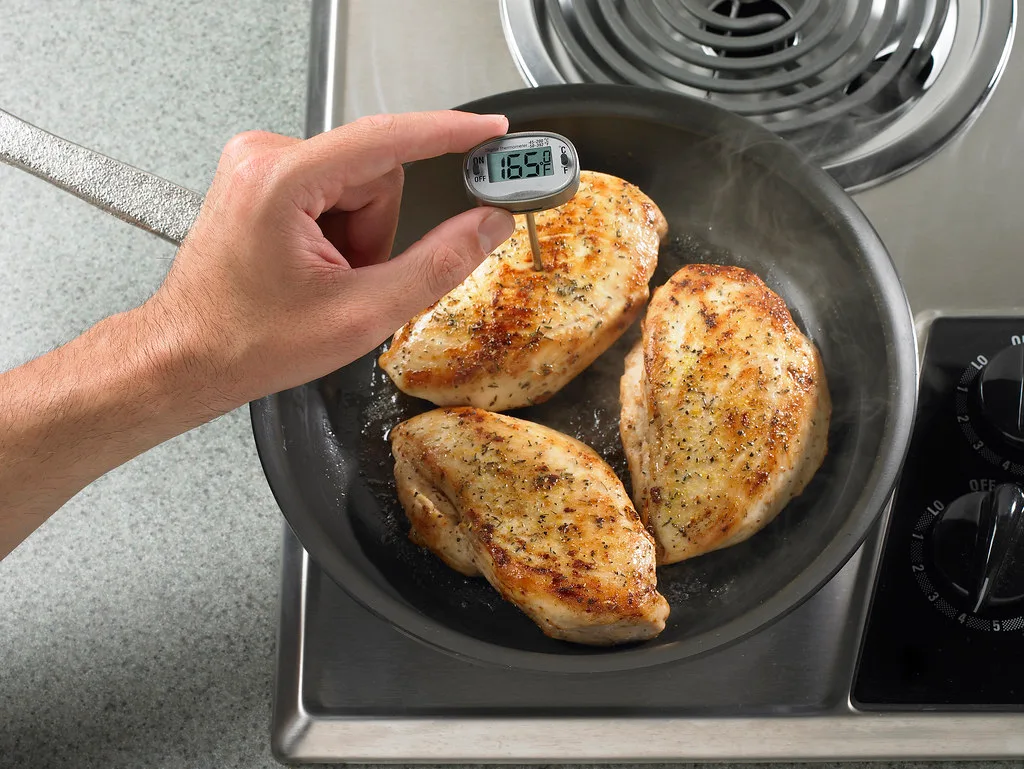
Using Your Food Thermometer Like a Pro
A good food thermometer is incredibly straightforward to use. You want to get an accurate reading from the very center of the meat, where it’s typically the thickest and takes the longest to cook. Don't just poke it in anywhere; strategic placement is vital for a true doneness check.
Where to Insert the Thermometer
When you're checking a whole chicken, aim for the thickest part of the thigh without letting the thermometer touch the bone. Bones conduct heat differently, which can give you a falsely high reading. For individual pieces like chicken breasts, thighs, or wings, insert the thermometer into the thickest section of the meat itself.
Reading the Temperature Accurately
Wait until the thermometer has been in the chicken for about 10-20 seconds, or until the reading stabilizes. Some digital thermometers will beep to signal they've reached a stable temperature. Remember that a whole chicken, or even larger cuts, will continue to cook slightly after you remove it from the heat source due to what's known as carryover cooking. For a whole bird, checking a couple of spots can be a good idea to confirm even cooking.
Why This Temperature Matters (It's Not Just About Dryness!)
Hitting that 165°F (74°C) mark is critical, and it’s not just about avoiding that dreaded pink center. It's a balance between safety and texture that ensures your culinary efforts result in a dish that's both safe and enjoyable to eat.
Food Safety First: Killing Harmful Bacteria
This temperature is the scientifically determined point where common foodborne pathogens are effectively neutralized. Per standards set by food safety agencies, insufficient cooking temperatures can leave these harmful bacteria alive, posing a significant health risk. Restaurant audits often scrutinize internal temperature logs to ensure compliance with safety regulations. As of 2026, these safety protocols remain a cornerstone of public health in food service.
The Sweet Spot for Juiciness
While 165°F is the safety threshold for all poultry, chicken breast, being very lean, can quickly become dry if cooked much beyond this point. The key is to pull the chicken off the heat right when it reaches this temperature, allowing carryover cooking to gently bring it up if needed, without the risk of overcooking. This precision ensures a tender, moist bite.
What About Dark Meat?
Dark meat cuts, like thighs and legs, have more fat and connective tissue which means they can typically tolerate slightly higher temperatures and often benefit from it. Many chefs and home cooks prefer to cook dark meat to around 170, 175°F (77, 79°C). This higher temperature breaks down connective tissues further, resulting in an even more tender and moist outcome. However, if you're aiming for simplicity and universal safety, always defaulting to 165°F for all parts of the chicken is perfectly acceptable and ensures safety.
Common Mistakes When Checking Chicken Doneness
Even with a thermometer in hand, a few common slip-ups can lead you astray. Understanding these pitfalls can help you avoid them and guarantee perfectly cooked chicken every time.
- Relying solely on color: While a lack of pink is a good sign, it's not foolproof. Some chicken can appear cooked on the outside but still be underdone inside, especially if it's been brined or marinated. Always use a thermometer for confirmation.
- Not checking the thickest part: As mentioned, thinner parts of the chicken cook faster. If you only check the thinner end of a breast or thigh, you might think it's done when the thicker part still needs time.
- Not accounting for carryover cooking: Removing chicken from the heat at exactly 165°F might mean your final temperature after resting is a few degrees lower than intended, or if you pull it too early and it rises too high. Plan for that residual heat to do some of the work.
- Using a faulty thermometer: Old, uncalibrated, or low-quality thermometers can give inaccurate readings. Ensure your thermometer is functioning correctly and calibrated if necessary.
